When Commerce Meets Connection: Rethinking the Philosophy of Companionship Through Chandigarh's Cultural Lens

American culture has a complicated relationship with the intersection of money and intimacy. The prevailing social narrative — absorbed through film, literature, and popular psychology — tends to treat financial exchange and genuine human connection as fundamentally incompatible. Pay for something, and you have, by definition, purchased something lesser: a simulation, a performance, a substitute. This is a deeply held assumption, and for many US visitors to Chandigarh, it arrives as invisible luggage, coloring their perceptions before the first encounter begins.
What makes Chandigarh's companionship economy genuinely interesting, from a philosophical standpoint, is how thoroughly it challenges this binary — not through argument, but through practice.
The American Framework and Its Discontents
To understand what makes Chandigarh's approach distinctive, it helps to examine the American framework it departs from. In the United States, the cultural anxiety around paid companionship is rooted in a particular conception of authenticity: the idea that genuine feeling must be spontaneous and uncompensated to be real. Anything that involves financial arrangement is presumed to be, at best, a professional performance and, at worst, an elaborate deception.
This framework has its own internal logic, but it also produces certain contradictions that are worth noting. Americans routinely pay for therapy, coaching, and various forms of emotional support without assuming that the care offered is therefore fraudulent. The wedding industry generates billions of dollars annually in the service of romantic connection. Matchmaking services charge substantial fees to facilitate the very relationships Americans regard as the gold standard of authentic human bonding.
The discomfort, it turns out, is not really about money and emotion being incompatible. It is about which specific forms of companionship are culturally sanctioned to carry a price tag.
Chandigarh's Different Architecture
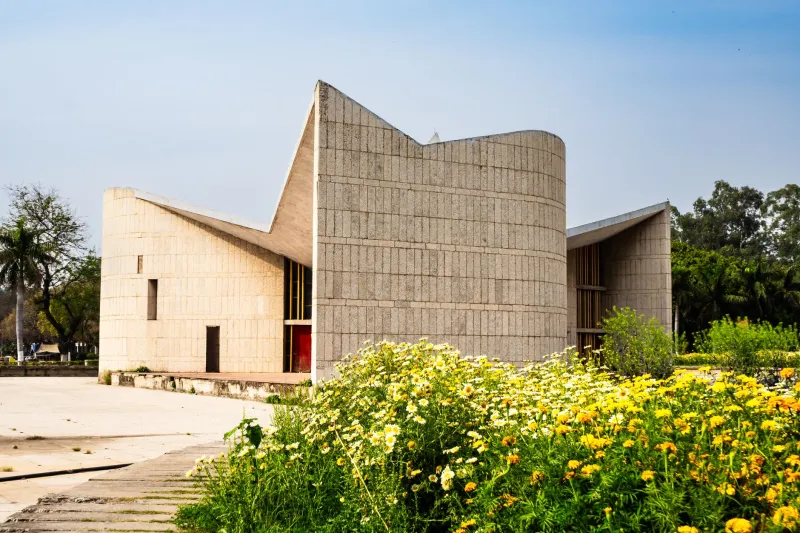
Chandigarh occupies a fascinating position within India's social landscape. Designed by Le Corbusier and developed as a planned administrative capital, the city has always carried a certain self-conscious modernity — a willingness to engage with ideas and structures that older Indian cities might approach more cautiously. This character is reflected in the relative sophistication and organization of its premium companionship sector.
Within this context, the financial dimension of a companionship arrangement is treated with a matter-of-factness that many American clients find initially surprising and ultimately clarifying. The exchange is transparent, agreed upon in advance, and does not carry the social shame that American cultural frameworks tend to attach to it. This transparency, paradoxically, creates more room for authenticity rather than less.
When both parties understand the terms clearly and without embarrassment, the encounter itself is freed from the particular kind of performance that ambiguity tends to produce. Neither party needs to pretend that something is other than what it is. And within that clarity, something genuine becomes possible.
What Genuine Connection Looks Like in a Transparent Economy
The question of whether connection can be authentic when commerce is involved is, at its core, a question about what authenticity actually requires. If we define it as the absence of any external structure or incentive, then very little human interaction qualifies — including most long-term relationships, which are embedded in economic, social, and familial structures that shape behavior profoundly.
A more useful definition might focus on presence, attentiveness, and genuine engagement — qualities that can exist alongside financial arrangement just as readily as they can exist within conventional social contexts. By this measure, a companion who brings genuine curiosity, warmth, and intellectual engagement to an encounter is offering something authentically valuable, regardless of the economic framework surrounding it.
Chandigarh's most accomplished professionals understand this intuitively. Their reputations are built not on the performance of connection but on its actual delivery — a distinction that sophisticated clients quickly learn to recognize and that the market, over time, rewards.
The Intellectual Dimension: What This Means for the Curious Client
For Americans who approach this experience with genuine intellectual curiosity rather than purely transactional intent, Chandigarh's companionship economy offers something unexpectedly rich: a practical encounter with a different philosophy of human exchange.
The experience of engaging with a companion who is simultaneously a professional and a genuinely interesting person — who brings her own perspective, humor, and cultural knowledge to the table — tends to complicate the simple narratives that American clients arrive with. It is difficult to maintain a reductive view of what is happening when the conversation is substantive, the engagement is mutual, and the evening has produced something that genuinely resembles enjoyment rather than mere transaction.
This is not an argument that financial exchange is irrelevant or that the commercial dimension should be ignored. It is simply an observation that the relationship between commerce and connection is more complex than American cultural shorthand tends to suggest — and that Chandigarh, with its particular combination of cosmopolitan sophistication and cultural directness, offers an unusually clear window into that complexity.
A Framework for the Thoughtful Visitor
For the American client who arrives in Chandigarh willing to examine his own assumptions, the experience has the potential to be genuinely horizon-expanding. This requires a particular quality of intellectual humility — a willingness to hold existing frameworks lightly and observe what is actually present rather than what prior expectations predict.
The companions who operate at the premium tier of Chandigarh's market are, in many cases, thoughtful participants in this dynamic. They have their own perspectives on what they do, their own understanding of what makes an encounter meaningful, and their own sense of professional pride that is not reducible to economics. Engaging with that complexity honestly — rather than flattening it into either idealization or dismissal — is where the most interesting conversations, and the most memorable experiences, tend to begin.